Keynote Speakers
ICIPCA 2026

Biography: Dr. Fevrier Valdez is a researcher of the National System of Researchers Level 2 in Mexico recognized by CONACYT and Senior Member of IEEE. His main interests are Intelligence Computing, Swarm Intelligence, Bio- Inspired Computing, Evolutionary Computing, Fuzzy Logic, Neural Networks, Intelligence Control and Parallel Computing. Actually the Ph.D. Fevrier Valdez is developing research in the bio inspired and nature computing. This researching is of great relevance to international level which had allowed an international recognition. Is professor researcher of full time in the Tijuana Institute of Technology. With his academic production, the professor has achieved to publish papers in several international journals, world congress and some chapters of books which are described as follows. His productivity is 62 papers in indexed journals in the Journal Citation Reports, 60 chapters of books, 69 congress memories and 4 books. In total,he has more than 290 publications with h index of 38 and more than 7000 citations according to Google Scholar. Also, one research was recognized as a Best Paper Award Second Place with the paper “Backpropagation Method with Type-2 Fuzzy Weight Adjustment for Neural Network Learning” in the Congress North American Fuzzy Information Processing Society 2012, Berkeley CA, USA. The Dr. Valdez, nowadays he is reviewer of papers in the international journals like Applied Soft Computing, Information Sciences, IEEE Transactions on Fuzzy Systems e IEEE Transactions on Neural Networks, Hindawi, NeuroScience, etc.
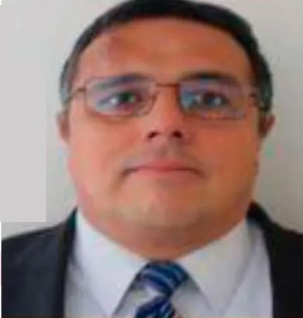
Biography: Prof. José David Alanís Urquieta holds a bachelor’s degree in computer science and a master’s degree in computer science, with a specialization in Mathematical and Scientific Computing from the Faculty of Computer Science (FCC) at BUAP. He completed doctoral studies in Information Technologies and Decision Analysis at CIP UPAEP. He carried out a Postdoctoral Fellowship at FCC-BUAP during 2015–2016, focused on the topic: Numerical Solution of Partial Differential Equations. He has served as a professor and researcher at the undergraduate and master's levels for the past 29 years at various public and private institutions, both nationally and internationally. He has worked as a Systems Administrator specializing in Networks and/or Databases at IFE (now INE), Gedas (now T-Systems), BUAP (master’s Program in Computer Science with a specialization in Scientific Computing), CFE, and UTP (for ten years). He has also worked as a programmer, database administrator, and systems administrator in several companies and projects related to Data Science and Artificial Intelligence. He holds certification in Java SE 6 Programming from the Oracle Certification Program, as well as ICarnegie certifications in Performance, Data Structures and Algorithms, Networking & Security, and Application Design Choices. He has published papers in various national and international journals and conferences indexed by IEEE, EBSCO, SCOPUS, among others. He has served as a reviewer, organizing committee member, chair, and co-chair at national and international events, mainly in the USA, India, Malaysia, Indonesia, and Mexico. He currently works as a Full-Time Professor in the Division of Information Technologies at the Technological University of Puebla. He holds a desirable academic profile and is a member of the Academic Body "Interfaces and MEMS Systems," at the Consolidation level. His areas of interest include Applied Mathematics, Free Software, Computer Networks, Operating Systems, Data Science and Artificial Intelligence.

Biography: Prof. Camilo Caraveo is a PhD in Computer Science and a full-time Associate Professor at the Universidad Autónoma de Baja California (UABC), where he is actively involved in teaching, research, and academic program development. He currently serves as coordinator of the Software Engineering and Emerging Technologies program, contributing to the training of highly skilled professionals aligned with industry and technological trends. His research focuses on intelligent systems, artificial intelligence, embedded systems, and bio-inspired computing, contributing to the advancement of applied computing and innovation-driven solutions. He is also part of academic research groups related to software development and intelligent systems within UABC. He has participated in technology transfer initiatives linking academia with industry, including the development of software solutions for the industrial sector, strengthening university–industry collaboration. Additionally, he has experience supervising graduate research and contributing to curriculum design in software engineering programs.